Avoid Infection at Home: Three At Home Pedicure Options for Seniors

Seniors with diabetes, poor circulation, neuropathy, or thick and painful toenails need a licensed professional, not a DIY pedicure. Everyone else can safely maintain healthy feet at home with the right tools and technique. The next step is simple: book a vetted mobile technician for anything beyond basic upkeep, or follow the caregiver routine below for regular maintenance. Any sign of infection, wound, or numbness means it’s time to call a podiatrist, not reach for clippers.
TL;DR:Only seniors with healthy feet and no circulation issues should attempt DIY pedicures, while those with health concerns need professional medical foot care.Mobile technicians must follow strict sanitation protocols, including sterilized tools and proper screening for conditions like infection or neuropathy.A routine professional pedicure lasts about 45 to 75 minutes, including health screening, with special care taken to avoid soaking for diabetic clients.Signs like swelling, pus, or thick nails that can’t be trimmed indicate the need to consult a podiatrist immediately.Regular foot checks and choosing licensed providers ensure safe, dignified care tailored to seniors’ medical and mobility needs.
Table of Contents
- At-Home Pedicure for Seniors: Three Real Options
- What Happens During a Professional Mobile Pedicure?
- How to Do a Safe At-Home Pedicure Step by Step
- Red Flags: When to Stop and Call a Podiatrist
- How to Vet a Mobile Foot-Care Professional
- Cost, Frequency, and Scheduling
- Why Licensed, Clinical-Aware Care Matters for Seniors
- A Caregiver’s Note on Dignity and Pacing
- Book a vetted in-home pedicure through a mobile beauty care provider offering professional, dignity-first foot care with background-checked, vetted providers. No transportation, no waiting room, no rushed appointments. Just a licensed professional working at the senior’s pace, in a familiar space.
- Sources
- FAQ
At-Home Pedicure for Seniors: Three Real Options
Every senior’s foot-care plan falls into one of three lanes, and picking the wrong one is where most home injuries start.
- DIY home pedicure. Best for healthy feet with no diabetes, neuropathy, or circulation issues. Low cost, full convenience, but only as safe as the caregiver’s technique.
- Professional mobile pedicure. A licensed technician comes to the home for routine nail care, callus management, and light massage. More cost than DIY, but proper sanitation and trained eyes on the feet.
- Clinical or nurse-led foot care. Reserved for diabetes, vascular disease, neuropathy, or nails too thick to trim safely. This isn’t cosmetic pampering; it’s medical foot care with health screening built in, and it’s what Lotus Foot Care’s mobile medical model is built around.
Aging feet lose circulation and sensation over time, which is exactly why Harvard Health recommends a weekly foot check regardless of which lane a senior falls into. Thick, discolored nails or numbness are the signal to move up a tier, from DIY toward clinical.
What Happens During a Professional Mobile Pedicure?
A trained mobile technician doesn’t just paint nails. Most visits follow a predictable rhythm: health intake first, then a brief foot soak, nail trimming and shaping, callus care, a light massage, and moisturizer application. The whole appointment usually runs 45 to 75 minutes, depending on nail condition and mobility needs.
Before booking, confirm the provider follows real sanitation standards:
- Single-use or hospital-grade sterilized tools for every client
- No shared foot baths without a liner or full disinfection between uses
- Written intake forms asking about diabetes, blood thinners, or open wounds
Ask these questions at booking: How do you sanitize tools between clients? Do you screen for contraindications like neuropathy or active infection? Can you accommodate a wheelchair or a recliner instead of a pedicure chair?
Pro Tip: Ask whether the technician will skip the soak entirely for a diabetic client. A good provider should know that prolonged soaking can soften skin too much and raise infection risk for someone with poor circulation.
How to Do a Safe At-Home Pedicure Step by Step
This routine works for seniors with healthy feet and no diabetes or circulation problems. If any of those apply, skip ahead to the red-flag section below.
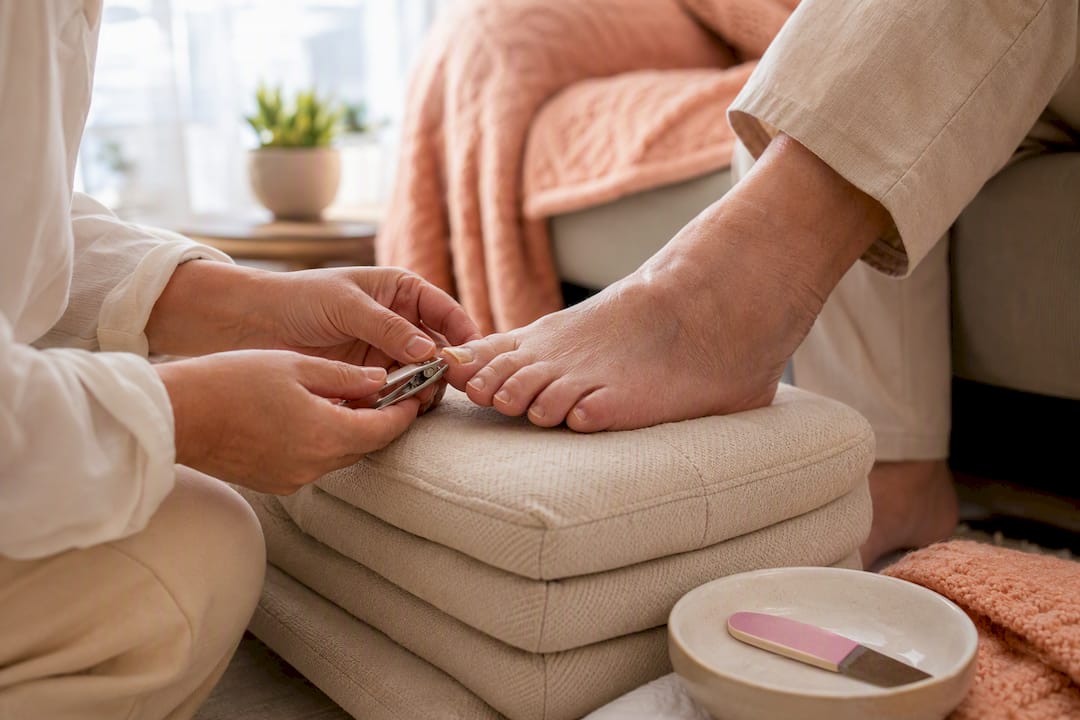
Before you start, set up a stable, well-lit space. A firm chair with arm support, a footstool, a towel, and warm (not hot) water are all you need. Test water temperature with your wrist first. Aging skin senses heat less accurately, so what feels warm to a senior might actually be scalding.
- Soak briefly. Five to ten minutes in lukewarm water softens nails without over-drying skin, matching the guidance from the Achilles Foot and Ankle Center.
- Inspect every inch. Look between toes, under nails, and across the sole for redness, cracks, or swelling before touching a clipper.
- Trim straight across. Use heavy-duty clippers, cutting straight rather than rounding the corners. AARP points to this technique as the simplest way to prevent ingrown nails.
- File gently. Smooth rough edges with an emery board rather than a metal file, which can tear thin, aging skin.
- Moisturize the heels and soles only. Skip the spaces between toes entirely. Trapped moisture there invites fungal infections.
For seniors with limited mobility, a long-handled brush and a rolling stool for the caregiver make the whole process easier on both backs and knees. Clean every tool with rubbing alcohol after each use, and never share clippers between household members.
Pro Tip: If clippers start to crumble the nail instead of cutting cleanly, stop immediately. Forcing a cut through overly thick nails risks splitting the nail bed and inviting infection.
Red Flags: When to Stop and Call a Podiatrist
Some signs mean the pedicure stops now, not later.
- Redness, warmth, or pus around a nail or cuticle
- Numbness or tingling that makes it hard to feel pain from a nick
- Nails so thick clippers can’t cut them cleanly
- Any open sore, cut, or blister that hasn’t healed
- Sudden swelling in the foot or ankle
These matter more for seniors because aging reduces circulation and nerve sensation, meaning a small cut can go unnoticed until it’s infected. A clinical foot exam catches vascular and neurological warning signs that a cosmetic pedicure was never designed to screen for, according to long-term care foot-exam standards.
Medicare’s coverage line matters here too: routine, cosmetic nail trimming is typically not covered, but medically necessary foot care tied to diabetes or vascular disease often is, depending on plan and diagnosis. Check specific coverage with the plan directly before assuming either way.
How to Vet a Mobile Foot-Care Professional
A good technician will welcome these questions. A provider who dodges them is a provider to skip.
- Ask for credentials. Request license verification, proof of background check, and liability insurance before the first visit.
- Ask about medical protocols. Do they follow a documented intake process, and will they decline service when something looks medically concerning?
- Confirm sanitation practices. Single-use tools or full sterilization between clients should be standard, not an upsell.
- Test accessibility answers. Can they work around a recliner, a wheelchair, or a hospital bed if needed?
- Watch for red-flag answers. Anyone who says they skip intake forms or reuses tools without sterilizing should be crossed off the list immediately.
Cost, Frequency, and Scheduling
Mobile pedicure pricing depends on location, nail condition, and whether the visit includes medical-grade assessment versus cosmetic care only. Clinical or nurse-led visits typically cost more than cosmetic-only mobile services, reflecting the added health screening.
- Frequency: Appointments should be scheduled regularly, as advised by a healthcare professional. Those with diabetes or fast nail growth may require more frequent visits.
- Scheduling tip: Book morning appointments when energy and light are both at their best
- Have ready: A list of medications, any diagnosed conditions, and a well-lit, accessible seating area before the technician arrives
Confirming pricing and service inclusions directly with the provider avoids surprises, since mobile service listings vary by city and provider.
Why Licensed, Clinical-Aware Care Matters for Seniors
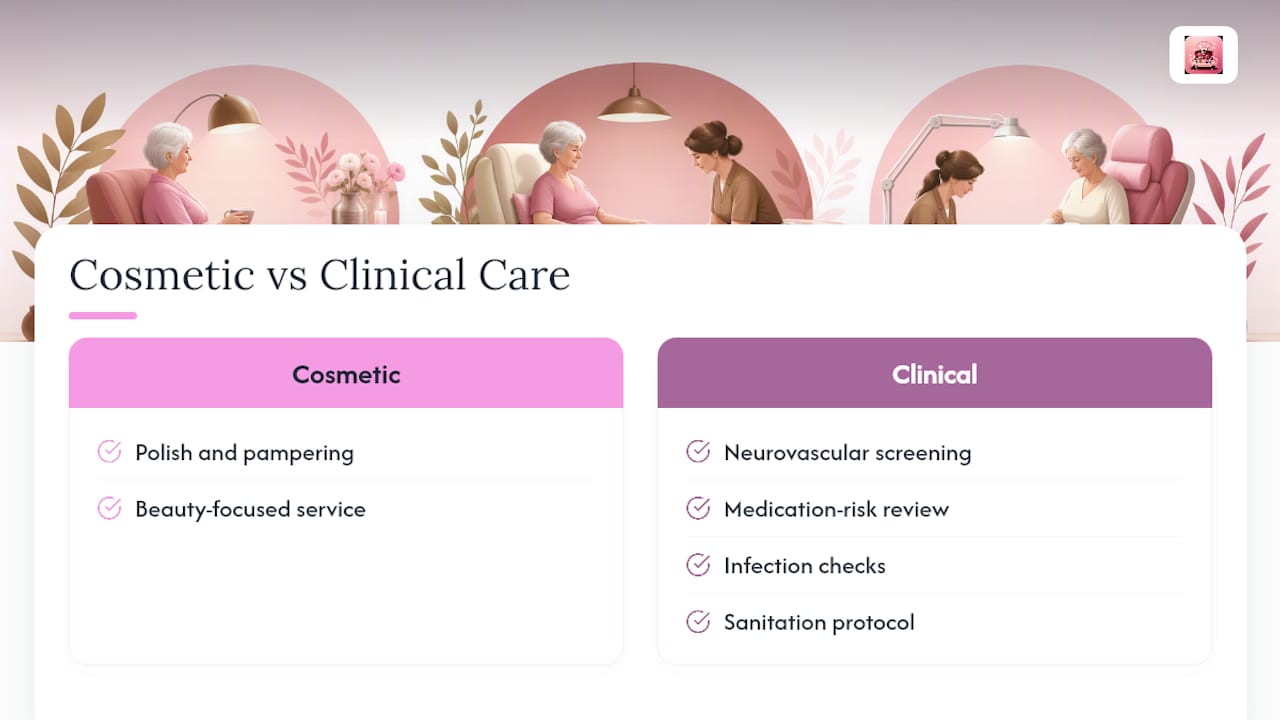
Cosmetic pedicures and clinical foot care aren’t interchangeable, and the distinction protects seniors more than most people realize. A cosmetic technician focuses on polish and pampering. A clinically trained provider screens for neurovascular issues, medication risks, and infection before ever picking up a clipper.
Senior-focused care leans into that distinction rather than around it. Ask any provider for their sanitation protocol and intake process before the appointment. A provider who can answer both clearly is one worth trusting with aging feet.
A Caregiver’s Note on Dignity and Pacing
Foot care is intimate. For many seniors, letting someone touch their feet takes real trust, especially if arthritis or vision loss makes the process feel vulnerable rather than routine.
Slow down. Narrate each step before doing it, ask permission before touching a foot, and let silence sit comfortably instead of rushing to fill it. A skilled professional treats consent and conversation as part of the service, not an afterthought. That’s the difference between a pedicure that feels clinical and one that feels like care.
— VÉLOURA Beauty On Demand
Book a vetted in-home pedicure through a mobile beauty care provider offering professional, dignity-first foot care with background-checked, vetted providers. No transportation, no waiting room, no rushed appointments. Just a licensed professional working at the senior’s pace, in a familiar space.

Before booking, ask two things every provider should answer without hesitation:
- What’s your sanitization protocol between clients?
- Can you accommodate mobility limitations like a wheelchair or recliner?
For related routines and what to expect from an in-home visit, see VÉLOURA’s guide to in-home beauty services for elderly clients. When ready, check availability and book directly through VÉLOURA’s senior care services to schedule a vetted, in-home pedicure appointment this week.
This article is general information, not a substitute for advice from a qualified doctor. Consult a qualified healthcare professional about your own circumstances before acting on anything here.
Sources
- Putting your best feet forward | Harvard Health
- Toenail care for elderly: Safe trimming and thick nails tips | Achilles Foot and Ankle Center
- Mobile Medical Pedicures, Foot Hygiene and Massage | Lotus Foot Care
- Smart guide to foot health | AARP
FAQ
How Do Seniors on Medicare Get a Pedicure?
Medicare typically covers foot care only when it’s medically necessary, such as for diabetes-related nail care, not routine cosmetic pedicures. Check the specific plan for coverage details tied to a diagnosed condition.
What Is It Called When a Nail Tech Comes to Your House?
This is generally called a mobile pedicure or in-home pedicure service. When delivered by a nurse or clinically trained provider for medical reasons, it’s often called mobile medical foot care.
Can I Do a Self-Pedicure at Home Safely?
Yes, if there’s no diabetes, neuropathy, or circulation problem. Soak briefly, trim nails straight across, file gently, and moisturize the heels and soles while avoiding the spaces between toes.
Who Will Cut My Toenails at Home If I Can’t Do It Myself?
A licensed mobile pedicure technician or a podiatrist offering house calls can trim nails safely at home. Services like VÉLOURA Care connect seniors with vetted, background-checked professionals for exactly this need.
Recommended

Comments ()