In-Home Hair Care for Mobility-Limited Individuals
TL;DR:In-home hair care for mobility-limited individuals uses adaptive tools and techniques to ensure safety and dignity. Regular visits from licensed mobile stylists and simple, low-maintenance styles support independence and confidence. Proper routines and proper equipment reduce risks and improve quality of life during grooming.
In-home hair care for mobility-limited individuals is defined as professional or caregiver-assisted grooming delivered at home, using adaptive tools and techniques that remove the need for salon visits. This approach, often called mobile hair care or adaptive grooming, preserves dignity and emotional well-being for people who use wheelchairs, walkers, or who are bedridden. Mobile beauty services eliminate transportation barriers by bringing licensed professionals directly to private homes and care facilities. The right combination of adaptive equipment, gentle technique, and professional support makes salon-quality results fully achievable at home.
What tools are essential for in-home hair care with mobility limitations?
The right tools are the foundation of safe, comfortable at-home hair care for anyone with mobility challenges. Adaptive tools like detachable showerheads, shower chairs, non-slip mats, and easy-grip bottles reduce physical barriers and raise both comfort and safety. Without them, even a simple wash can become exhausting or risky.
Here are the core items every caregiver or individual should have on hand:
- Detachable handheld showerhead: Directs water precisely, reducing the need to move the head or body.
- Shower chair or bath bench: Provides stable seating so washing does not require standing.
- Non-slip bath mat: Prevents falls on wet surfaces, a leading cause of bathroom injuries.
- Grab bars: Installed near the shower or sink, these give a secure handhold during position changes.
- Easy-grip shampoo and conditioner bottles: Pump-top or lever-style dispensers reduce hand strain.
- Soft, wide-tooth comb: Glides through wet hair without pulling, minimizing scalp irritation.
- Waterproof cape or towel clips: Keep clothing dry and reduce the need for a full outfit change after washing.
Mild, fragrance-free shampoos and conditioners are the best product choices for people with sensitive scalps or skin conditions. Many medications common among older adults increase scalp sensitivity, so gentle formulas reduce the risk of irritation.
| Tool | Purpose | Key benefit |
|---|---|---|
| Detachable showerhead | Targeted water delivery | Reduces body movement needed |
| Shower chair | Seated washing position | Prevents fatigue and fall risk |
| Non-slip mat | Floor traction | Prevents slipping on wet surfaces |
| Grab bars | Stable handhold | Supports safe position changes |
| Easy-grip bottles | Simplified dispensing | Reduces hand and wrist strain |
| Wide-tooth comb | Gentle detangling | Minimizes scalp and hair stress |
Pro Tip: Install grab bars before you need them. Retrofitting a bathroom after a fall is far more stressful than planning ahead.
How do you wash hair safely at home with limited mobility?
A structured routine makes hair washing manageable and safe, even with significant physical limitations. The goal is to minimize effort, protect the body, and keep the experience calm rather than rushed.
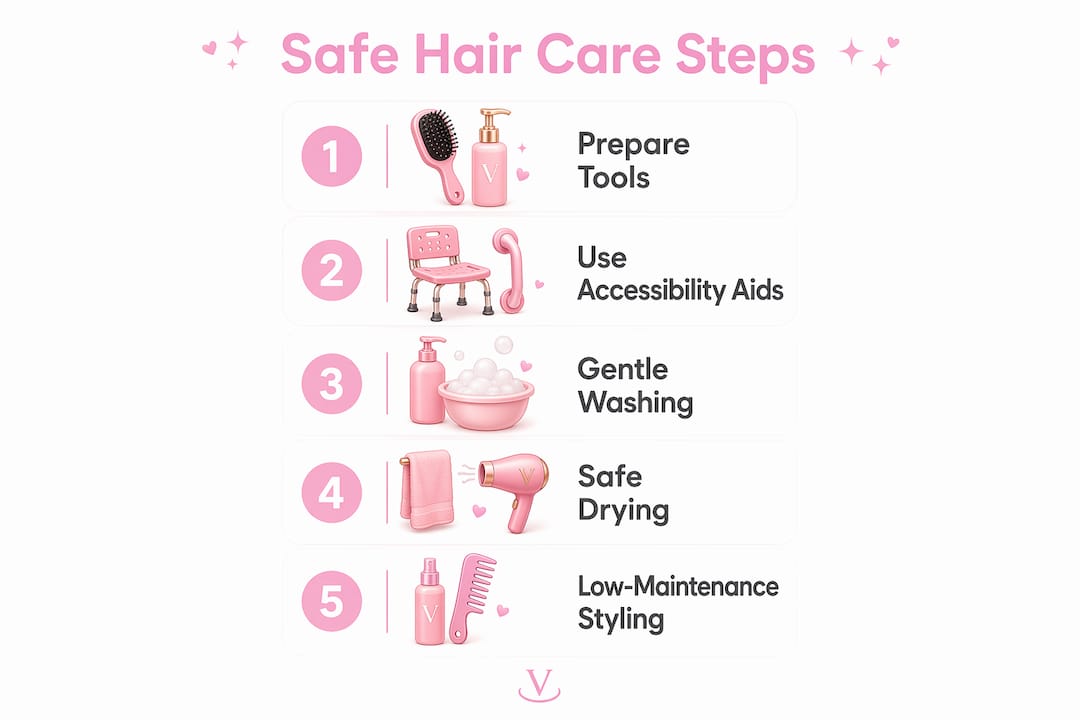
Follow these steps for a safe, effective wash:
- Gather everything first. Place shampoo, conditioner, a towel, and a comb within arm’s reach before starting. Reaching mid-wash increases fall risk.
- Set the water temperature. Use lukewarm water. Hot water dries the scalp and raises the risk of dizziness, especially for older adults on blood pressure medications.
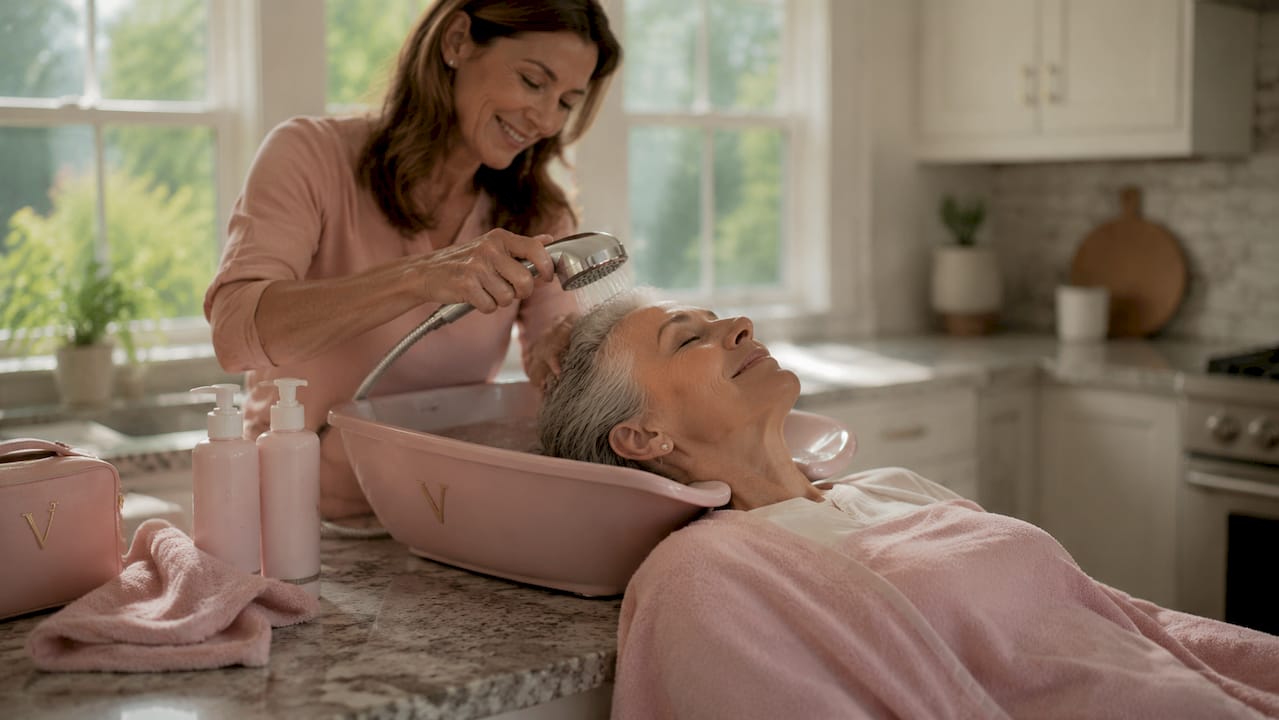
- Position safely. Sit on a shower chair or bath bench. For bedbound individuals, position the head over a basin with a rolled towel supporting the neck.
- Wet the hair thoroughly. Use a detachable showerhead or a cup to saturate hair from roots to ends. Gentle scalp washing with lukewarm water and a handheld showerhead reduces discomfort and physical effort significantly.
- Apply shampoo and massage gently. Use fingertip pads, not nails. Work in small circular motions from the front hairline to the nape. This stimulates circulation without causing abrasion.
- Rinse completely. Leftover shampoo causes scalp irritation. Take extra time here, especially at the nape and behind the ears.
- Apply conditioner if needed. Focus on mid-lengths and ends. Leave for one to two minutes, then rinse.
- Pat dry, do not rub. Rubbing creates friction that weakens hair. Press a soft towel gently against the hair and scalp.
- Comb while damp. Start at the ends and work upward to avoid breakage.
- Rest before styling. Allow five to ten minutes of seated rest before moving to drying or styling. This prevents fatigue from stacking.
For bedbound individuals, in-bed hair washing uses warm water, mild shampoo, soft cloth rinsing, and gentle scalp massage with proper head support to maximize comfort and hygiene without leaving the bed. A basin placed under the head contains water and keeps bedding dry.
Pro Tip: Schedule hair washing at the time of day when energy is highest. For many people with chronic conditions or mobility challenges, that window is mid-morning, after medication has taken effect but before afternoon fatigue sets in.
What are practical styling tips for easy, low-maintenance hair care at home?
Low-maintenance styling is not a compromise. It is a smart, dignity-preserving choice that reduces daily grooming demands without sacrificing appearance or confidence.
Short, low-maintenance haircuts and simple clipped-back styles help preserve hygiene and confidence without placing daily physical demands on the individual or caregiver. A well-chosen cut can reduce styling time from twenty minutes to under five.
Consider these styling options and practical factors:
- Pixie cuts and short bobs: Require minimal product and dry quickly, reducing time spent with arms raised.
- Soft layers: Add shape without requiring daily heat styling.
- Simple clips and headbands: Keep hair back and tidy with one-handed application.
- Braids or loose twists: Work well for longer hair and can last two to three days between restyling.
- Avoiding tight styles: Ponytails and tight buns stress the scalp and hairline, which is a concern for anyone on blood thinners or with thinning skin.
Booking mobile hair care services proactively, before hygiene needs become severe, is easier to manage and far less disruptive to routine. A licensed stylist visiting every four to six weeks for a trim and style reset reduces the daily grooming burden dramatically.
Medication effects matter here too. Blood thinners, corticosteroids, and some blood pressure medications cause scalp sensitivity or hair thinning. Caregivers should use soft-bristle brushes and avoid vigorous scalp manipulation on days following medication changes.
Pro Tip: Ask a mobile stylist to teach you two or three simple styles during their visit that you or your caregiver can replicate at home. This turns one appointment into weeks of confident, easy grooming.
How do you troubleshoot common challenges and stay safe during at-home grooming?
Even with the right tools and routine, challenges arise. Knowing how to handle them keeps grooming safe and stress-free.
Scalp sensitivity and skin changes
Caregivers must screen for skin sensitivity, thinning skin, bruising, and medication effects before grooming, because these conditions increase injury risk from standard tools and techniques. Switch to a fragrance-free, sulfate-free shampoo and use only fingertip pressure during washing. If the scalp shows redness, flaking, or open areas, pause and consult a healthcare provider before continuing.
When traditional washing is not possible
Waterless shampoos and dry cleansing products refresh hair without water, making them ideal when mobility is severely limited or water access is difficult. They maintain cleanliness and manageability between full washes. Apply to the roots, massage gently, and brush through. Most formulas absorb within two to three minutes.
Fall prevention during grooming
Falls are the most serious risk during at-home grooming. Never rush. Keep the floor dry, use non-slip mats, and never leave a mobility-limited person standing unsupported during washing. If a person cannot safely sit in a shower chair without assistance, two caregivers or a professional visit is the right call.
When to bring in a professional
Some situations call for licensed mobile professionals rather than caregiver-led grooming. These include post-surgery recovery, severe arthritis flares, cognitive decline affecting cooperation, or any time grooming causes significant pain or distress.
| Grooming approach | Best for | Limitation |
|---|---|---|
| Caregiver-assisted washing | Mild to moderate mobility limits | Requires caregiver training and time |
| Waterless shampoo | Bedridden or post-surgery periods | Does not fully replace water washing |
| In-bed basin washing | Fully bedridden individuals | Needs proper setup and two people |
| Licensed mobile professional | Complex needs or regular maintenance | Scheduling and cost considerations |
What we have learned from working with mobility-limited clients
At VÉLOURA Beauty On Demand, the most consistent thing we hear from clients and caregivers is this: grooming is not just about hair. It is about feeling like yourself.
Grooming routines tailored to individual energy and capability prevent the process from becoming stressful or painful. That sounds simple. In practice, it requires patience, observation, and a willingness to slow down. We have seen what happens when a stylist rushes through a visit with a client who has limited stamina. The client tenses up, the experience becomes unpleasant, and they are less willing to accept help next time. Slowing down is not inefficiency. It is the service.
Respect looks like asking before touching. It looks like explaining each step before you do it. It looks like stopping when someone says they are tired, even if the job is not finished. A half-styled head of hair is better than a person who feels violated or exhausted.
The emotional benefit of a good grooming session is real and measurable in mood, confidence, and willingness to engage socially. We have watched clients who were withdrawn and reluctant become visibly lighter after a professional visit. That is not a small thing. That is quality of life.
— VÉLOURA
Professional in-home hair care, delivered to your door
You deserve professional hair care that fits your life, not the other way around.

VÉLOURA Beauty On Demand connects you with licensed, vetted beauty professionals who come directly to your home, care facility, or residence. No commute. No waiting room. Just calm, professional care on your schedule. Our stylists are experienced with adaptive grooming and work at your pace, whether that means a full wash and style or a simple trim in a recliner. Book a mobile stylist near you in Los Angeles, New York City, or Miami. You can also browse the full range of in-home beauty services available through the VÉLOURA app and find the right fit for your needs today.
FAQ
What is in-home hair care for mobility-limited individuals?
In-home hair care for mobility-limited individuals is professional or caregiver-assisted grooming performed at home using adaptive tools and techniques. It removes the need for salon travel and adapts to wheelchairs, beds, and recliners.
What adaptive tools make home hair washing safer?
A detachable handheld showerhead, shower chair, non-slip mat, and easy-grip product bottles are the core tools. Together, they reduce physical effort and lower fall risk during washing.
How often should a mobile stylist visit for home hair care?
A licensed mobile stylist visiting every four to six weeks for a trim and style reset significantly reduces daily grooming demands. Proactive scheduling before hygiene needs become severe is easier to manage and less disruptive.
Can waterless shampoo replace regular washing?
Waterless shampoo maintains cleanliness and manageability between full washes but does not fully replace water-based washing. It is best used during recovery periods or on days when a full wash is not possible.
What haircut works best for someone with limited mobility?
Short cuts like pixie styles or soft bobs are the best options. They dry quickly, require minimal product, and reduce the time spent with arms raised during styling.
Key takeaways
In-home hair care for mobility-limited individuals works best when adaptive tools, a structured routine, and professional mobile support are combined into a consistent, dignity-centered approach.
| Point | Details |
|---|---|
| Adaptive tools are non-negotiable | A shower chair, detachable showerhead, and non-slip mat form the safety foundation for home hair washing. |
| Routine structure reduces fatigue | Washing at peak energy times and resting between steps prevents exhaustion and injury. |
| Low-maintenance cuts save daily effort | Short styles like pixie cuts or bobs reduce styling time and physical demand significantly. |
| Screen for skin and medication effects | Thinning skin and blood thinners increase grooming injury risk and require gentler techniques. |
| Mobile professionals fill critical gaps | Licensed stylists who visit at home handle complex needs and preserve dignity when caregiver-led grooming is not enough. |
Recommended

Comments ()